
What Stamped Concrete Patterns and Colors Work Best for Homes in North Texas?
For homes in North Texas, the best stamped concrete patterns and colors typically combine natural-looking textures, such as ashlar slate, flagstone, seamless stone, or wood plank, with warm earth tones, soft grays, tans, or blended neutrals. The right combination should complement your home’s exterior, fit your outdoor design style, and remain visually comfortable in North Texas’s sunny, hot climate.
At My New Patio & Fence, we help homeowners throughout The Colony and surrounding Collin and Denton County communities turn ordinary concrete into an attractive part of their outdoor living space. Stamped concrete offers considerable design flexibility because homeowners can choose the pattern, base color, accent colors, borders, and finishing details. Our goal is not simply to install a decorative surface. We help customers select combinations that make sense with their home’s architecture, landscaping, patio cover, fencing, and long-term plans for the backyard.
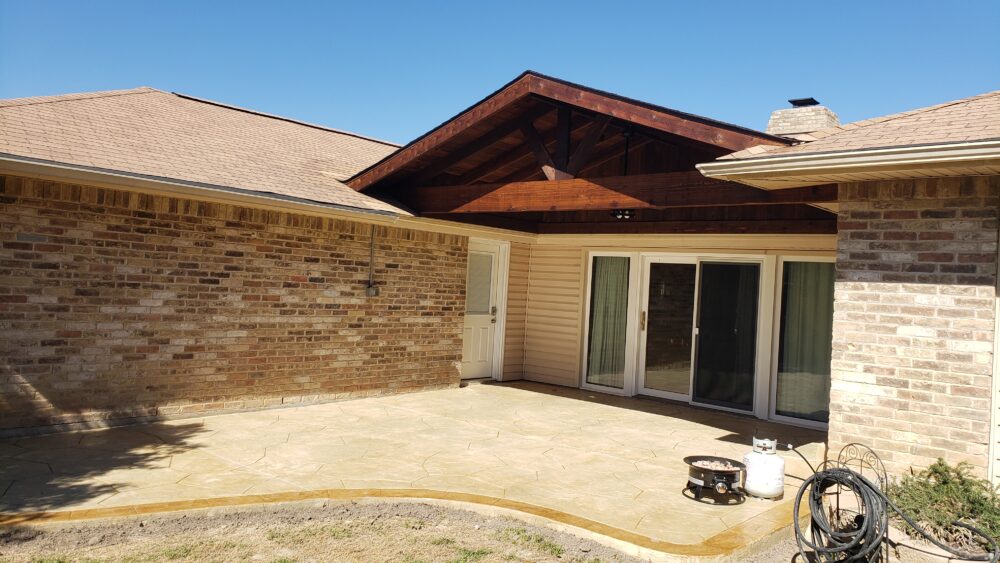
Choosing Stamped Concrete Designs for North Texas Homes
Stamped concrete can imitate materials such as slate, flagstone, brick, cobblestone, and wood while retaining the versatility of a concrete surface. According to Concrete Network, ashlar slate and cobblestone remain among the most popular stamped concrete patterns, while wood-look planks and seamless textures are also popular current choices.
The key is choosing a pattern and color as a coordinated design rather than making each decision separately.
Which Stamped Concrete Pattern Matches Your Home’s Style?
The best pattern usually echoes the architectural character of your home without competing with it. A traditional home may benefit from defined stone or masonry patterns, while a modern home often looks better with cleaner lines and understated texture.
Popular options include:
- Ashlar slate: Rectangular and square shapes create a refined natural-stone appearance. Concrete Network notes that ashlar slate works well with both traditional and contemporary homes.
- Flagstone: Irregular shapes can create a relaxed, natural look that works especially well around patios and garden areas.
- Cobblestone: Defined grout lines provide an established, traditional character.
- Wood plank: Wood-grain texture gives homeowners the appearance of decking while using concrete instead of actual boards.
- Seamless stone texture: Adds natural surface variation without prominent repeating joint patterns, making it a strong choice for contemporary outdoor spaces.
Consider scale as well as style. A highly detailed pattern can feel busy in a compact patio, while larger patterns and seamless textures can make the space feel more open.
What Stamped Concrete Colors Look Best in North Texas?
Neutral earth tones and grays are dependable choices because they coordinate easily with brick, stone, siding, fencing, and landscaping. Concrete Network identifies gray and earth tones among the most popular stamped concrete colors and recommends subtle earth tones for outdoor pavement.
For The Colony homeowners, useful combinations include:
- Beige or sandstone with brown accents
- Light gray with charcoal accents
- Warm tan with walnut or darker brown detailing
- Greige with subtle darker highlights
- Terra cotta or russet for brick-inspired designs
North Texas climate should also factor into the decision. The National Weather Service classifies the Dallas-Fort Worth climate as humid subtropical with hot summers, and its 1991-2020 climate normals show an average of 20 days reaching 100°F per year.
Because patios receive substantial summer sun, homeowners may prefer lighter or medium colors rather than an extremely dark surface in exposed areas. Color should also be evaluated next to the actual home exterior, especially when coordinating with common North Texas brick and stone finishes.
How Do Contractors Create Natural-Looking Stamped Concrete Colors?
Natural-looking stamped concrete usually uses more than one tone. A base color establishes the overall appearance, while secondary or antiquing colors emphasize texture, joints, and variations in the stamped pattern.
Concrete Network explains that integral pigments color the concrete throughout and are frequently combined with contrasting accent or antiquing colors. Surface-applied color, stains, and release agents can then add the variation that helps stamped concrete resemble natural stone.
For example, a warm sandstone base paired with darker brown accents can create depth in a slate or flagstone pattern. A light gray base with charcoal highlights can produce a cooler, more contemporary appearance.
Avoid choosing solely from a printed or digital color chart. Concrete Network advises that final concrete color can vary based on factors such as cement, sand, water, and the coloring method used. Ask to see physical samples or examples whenever possible.
Should Your Patio Match Your House Exactly?
Your stamped concrete should coordinate with your home, not necessarily match it exactly. Repeating one or two undertones from your brick, stone, roof, trim, or fence usually creates a more intentional appearance than attempting an exact color match.
For example, a red-brick home may look balanced with warm tan concrete and subtle brown accents rather than another strong red surface. A home with cool gray stone could pair naturally with light gray stamped concrete and charcoal detailing.
Also consider the entire backyard. Patio covers, fencing, outdoor kitchens, pools, landscaping, and furniture all contribute to the finished design.
Can Borders and Accent Patterns Improve a Stamped Concrete Patio?
Yes. Borders can define the patio and add contrast without making the entire surface overly complicated. Concrete Network recommends borders and medallions as ways to personalize stamped concrete designs.
A darker border around a lighter patio can create a finished, framed appearance. Another option is using a simple primary field pattern and reserving a more detailed texture for an edge or transition area.
The key is restraint. When patterns, colors, borders, and accents all compete for attention, the patio can quickly become visually busy.
Stamped Concrete Pattern and Color FAQs
What is the most popular stamped concrete pattern for patios?
Ashlar slate is a longstanding popular choice because its varied rectangular shapes mimic natural stone and work with many architectural styles. Seamless stone textures and wood-look patterns are also popular options.
What colors make stamped concrete look like real stone?
Earth tones, tans, grays, browns, and layered neutral shades generally create the most realistic stone appearance. Using a lighter base with darker accent or antiquing color adds depth and highlights the stamped texture.
Can stamped concrete have more than one color?
Yes. Multiple colors can be layered to create natural variation, contrasting borders, or highlighted textures. This multi-tonal approach is one reason stamped concrete can closely imitate natural stone and other materials.
How should I choose a stamped concrete color for my patio?
Start with the permanent features of your property, including your home’s brick, stone, siding, roof, fencing, and patio cover. Select a complementary base color, then use one or more subtle accent tones to add depth rather than trying to match every exterior color exactly.
Ready to Transform Your Patio With Stamped Concrete?
The right combination of stamped concrete patterns and colors can make a new patio feel like it was designed as part of your home from the beginning. My New Patio & Fence helps homeowners in The Colony and throughout Collin and Denton County create outdoor spaces that balance style, function, and lasting curb appeal.
Ready to explore stamped concrete designs for your backyard? Contact My New Patio & Fence to get started.