
Should I Choose a Freestanding or Attached Patio Cover?
For most homeowners in The Colony, an attached patio cover is a good fit when the goal is to create convenient shade directly outside the home, while a freestanding patio cover works better for a separate seating, poolside, garden, or entertainment area. The right choice depends on your yard layout, desired location, home structure, drainage, setbacks, and how you plan to use the covered space.
At My New Patio & Fence, we help homeowners throughout The Colony and surrounding Collin and Denton counties turn underused backyards into comfortable outdoor living spaces. Serving the area since 2005, our team understands that a patio cover needs to do more than look attractive. It should complement your home, provide practical protection from the North Texas sun and rain, and make sense for the way your family uses the backyard. We offer custom patio covers, pergolas, stamped concrete, fences, and gates, giving homeowners the flexibility to coordinate multiple elements of an outdoor renovation. Our process starts by looking at the property, discussing your goals, and identifying a design that fits the available space.
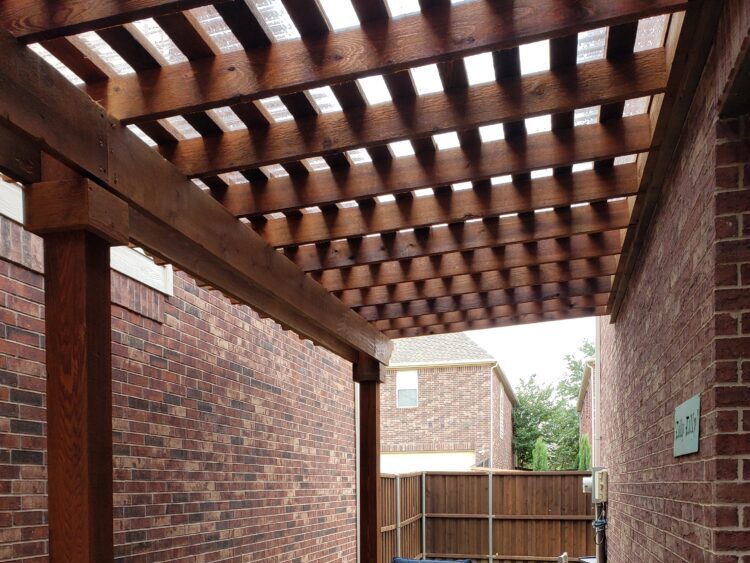
Comparing Attached and Freestanding Patio Covers for North Texas Homes
The biggest difference is structural placement. An attached patio cover connects to the house, while a freestanding patio cover supports itself independently. That distinction affects where the cover can go, how it integrates with your home, and what may be required during design and permitting.
What Are the Advantages of an Attached Patio Cover?
An attached patio cover is usually the most natural choice when you want your outdoor space to function as an extension of the house.
Because the cover begins at or near an exterior wall, homeowners can step from the home directly into a shaded area. This arrangement can work especially well over an existing back patio or a new stamped concrete patio.
Common benefits include:
- Direct shade outside your back door
- A more seamless indoor-outdoor transition
- Convenient placement for outdoor dining and entertaining
- Protection from sun and light rain close to the house
- A design that can visually complement the home’s roofline and architecture
Structural planning is particularly important with this option. The City of The Colony’s current patio-cover requirements state that structures and foundations of 400 square feet or more, and structures attached to the house, must have engineered plans. The city also requires a permit for any shade structure attached to the main house.
That makes professional planning important before construction begins.
When Does a Freestanding Patio Cover Make More Sense?
A freestanding patio cover makes sense when the area you want to shade is away from the house or when connecting a cover to the home’s structure is undesirable or impractical.
For example, you may want a separate covered lounge near a pool, fire feature, garden, or entertainment area. A freestanding design gives you more flexibility to position the structure around how your yard actually functions.
It can be especially useful when:
- Your existing patio is separated from the house
- You want shade farther into the backyard
- The home’s roofline makes attachment complicated
- You are creating a distinct outdoor destination
- You want a covered space near a pool or landscaped area
Freestanding does not mean unrestricted placement. Property lines, easements, utilities, setbacks, and lot coverage can all influence where an accessory structure can be built.
The City of The Colony requires site plans for applicable patio-cover permits to show the proposed structure in relation to property lines, existing structures, easements, rights-of-way, and overhead utilities.
Do Freestanding and Attached Patio Covers Require Permits in The Colony?
Permit requirements depend partly on the size and type of structure.
According to the City of The Colony, a building permit is required before constructing a detached shade structure of 120 square feet or more or any shade structure attached to the main house. Structures under 120 square feet may not require a permit in some circumstances, but they must still comply with applicable construction standards and setbacks.
The city has also adopted updated building codes, including the 2024 International Residential Code, so homeowners should confirm current requirements before beginning construction.
If your neighborhood has a homeowners association, that can add another step. The city’s patio-cover submittal requirements call for an HOA approval letter when the property is located within an HOA area.
How Do You Decide Which Patio Cover Fits Your Yard?
Start with where you actually want to spend time outdoors, rather than choosing a style based only on appearance.
Ask these questions:
- Where do we need shade most? If it is immediately outside the back door, an attached cover may be the logical starting point. If it is across the yard, consider freestanding.
- How will we use the space? Dining and everyday family use often benefit from proximity to the kitchen, while a freestanding structure can create a separate entertainment zone.
- What does the house allow? Rooflines, exterior walls, windows, doors, drainage, and existing construction can affect attachment options.
- What does the property allow? Setbacks, easements, utilities, HOA requirements, and lot coverage need to be considered before finalizing placement.
- What look do we want? A custom wood patio cover can coordinate with the architecture of the house, while freestanding structures can establish their own visual identity.
This planning matters in The Colony, where backyards vary from compact residential lots to properties with enough room for multiple outdoor living zones. A custom design can help homeowners use the available space efficiently rather than forcing a standard structure into the yard.
Which Patio Cover Is Better for North Texas Weather?
Both attached and freestanding patio covers can perform well in North Texas when they are properly designed and constructed. The quality of the structure, roofing, support system, drainage, and installation matters more than whether the cover is attached or freestanding.
Homeowners in The Colony want outdoor spaces that provide dependable shade during hot weather while also handling rain and changing Texas conditions. My New Patio & Fence offers wood patio covers, pergolas, insulated roofing options, and maintenance-free styles, allowing the structure to be matched to the homeowner’s priorities for shade, appearance, and upkeep.
Frequently Asked Questions About Patio Covers
Is an attached patio cover part of the house?
An attached patio cover is structurally connected to the home, but it remains an outdoor shade structure rather than automatically becoming conditioned living space. Because it connects to the house, additional structural and permitting requirements may apply.
Can I put a freestanding patio cover anywhere in my backyard?
No. Placement can be restricted by property setbacks, easements, utilities, zoning requirements, and HOA rules. Review these factors before choosing the final location.
Does a patio cover under 120 square feet need a permit in The Colony?
A detached shade structure under 120 square feet may not require a building permit, but it must still meet applicable construction standards and setbacks. Any shade structure attached to the main house requires a permit, according to current City of The Colony guidance.
Can a patio cover be built over a new concrete patio?
Yes. Planning the patio surface and cover together can create a more cohesive outdoor living area. Coordinating the footprint early also helps account for posts, foundations, drainage, furniture placement, and traffic flow.
Ready to Find the Right Patio Cover for Your Yard?
Whether an attached cover makes your patio feel like a natural extension of your home or a freestanding design creates the backyard retreat you have been imagining, the best solution starts with your property and how you want to use it.
Ready for a custom patio cover? Contact My New Patio & Fence to start planning your outdoor space.