
Beyond the Picket: A Complete Guide to Unique Wood Fence Designs
When most homeowners imagine a wood fence, they picture the classic white picket, charming, timeless, a little nostalgic. But that image only scratches the surface of what’s possible. The right fence design doesn’t just mark a boundary; it tells a story about your home, your style, and how you want to experience your outdoor space. At My New Patio and Fence, we’ve helped hundreds of homeowners move past the default and discover fence styles that actually match how they live, and we’re here to help you do the same.
The truth is, wood fencing has evolved into a genuinely exciting design category. Whether you’re after maximum privacy, a breezy open feel, or something that simply turns heads on the street, there’s a wood fence style built for exactly that purpose. Understanding your options is the first step toward making a decision you’ll love for years to come.
The Classic Picket Fence and Why It Still Earns Its Place
There’s a reason the picket fence has stuck around. With its evenly spaced vertical boards attached to horizontal rails, this design strikes a perfect balance between openness and definition. It communicates friendliness, your yard is visible, your landscaping gets to shine, and the neighborhood feels connected. Picket fences work especially well for front yards where curb appeal matters most. They come in a variety of picket top shapes too, from the traditional pointed cap to flat, dog-eared, or even decorative French Gothic cuts that add a surprising elegance.
Board on Board vs. Side by Side: Two Approaches to Privacy
These two styles are often confused, and the difference is more meaningful than it might seem. A side-by-side fence places boards directly next to each other with no overlap, creating a clean, solid wall of wood. It’s straightforward and cost-effective, delivering solid privacy without complexity.
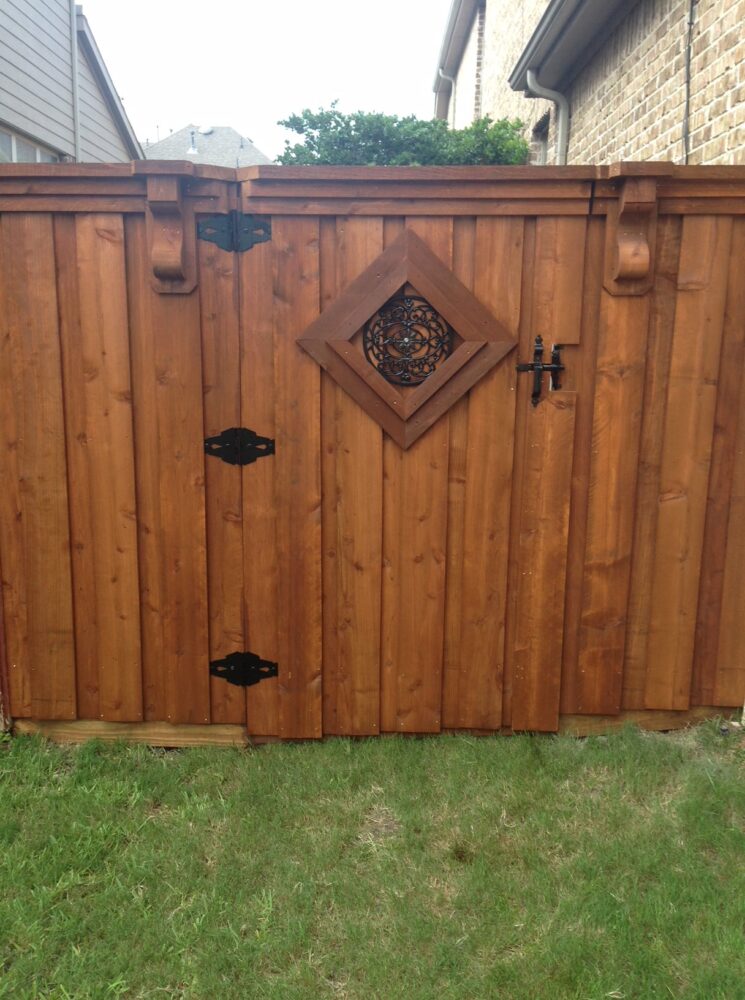
Board on board takes a more thoughtful approach. Here, boards alternate on either side of a center rail, with each board overlapping its neighbor slightly. The result is a fence that offers full privacy from straight-on angles while still allowing a small amount of airflow, and it looks just as attractive from the outside as it does from inside your yard. For homeowners who want privacy without the closed-off feeling of a solid wall, board on board is often the smarter choice.
The Shadowbox Fence: Privacy With Personality
Imagine standing in your backyard on a breezy evening, feeling totally at ease while your outdoor space still feels open and airy. That’s the shadowbox experience. Similar to board on board in its alternating board placement, the shadowbox design uses a wider gap between boards, creating that signature checkerboard look when viewed at an angle. It’s a design that feels intentional and modern, and it handles wind load significantly better than a fully solid fence, an important practical benefit that often gets overlooked.
Post and Rail: When Less Is More
Not every fence needs to be a wall. Post and rail fencing uses two or three horizontal rails connecting sturdy vertical posts, leaving the space between entirely open. It’s a design rooted in practicality, originally built for livestock and rural properties, but it translates beautifully into residential landscaping as a natural, unfussy boundary marker. Pair it with climbing plants or native grasses and you have a fence that feels less like a barrier and more like a feature.
Finding the Design That Fits Your Life
Every fence style carries its own personality, and the best choice depends on how you actually use your outdoor space. A young family with kids and pets will have very different priorities than someone focused on creating a private garden retreat. At My New Patio and Fence, we take the time to understand your goals before recommending anything, because a fence should work for your life, not just look good in a catalog. Reach out to My New Patio and Fence today for a free consultation and discover which wood fence design is built for your home.